“There is more philosophy in one bottle of wine then in all the books in the world.”
by Louis Pasteur (French chemist and scientist)

WINE OF THE HOUR - Grüner Veltliner

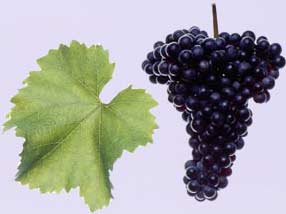
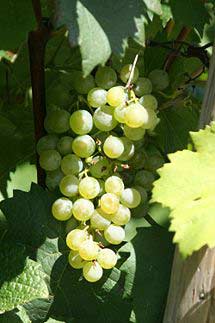
Austria's Grüner Veltliner has suddenly become the hottest thing on everybody's list. Until recently, wines made from Grüner Veltliner, the most widely planted grape in Austria, enjoyed but faint praise. New vintages were served by the pitcherful in Austria's vinous equivalents to brew pubs called "Heuriger".
Abroad grüners were known as pleasant quaffing wines best drunk young. Today, though, suddenly, grüner veltliner - pronounced approximately GROON-er FELT-lihnur and known in some circles as GrüVe - is the wine of the hour from Sidney to San Francisco. It inhabits vast sections of wine lists at bench mark restaurants, is beloved by chefs, and gets idolized by savvy sommeliers for its seemingly limit-less food friendliness (it goes with everything from oysters to osso buco). And in London in 2002, Grüner Veltliner starred in sequence of improbable blind tastings where its best exemplars outscored stellar burgundies like Montrachet and Corton-charlemagne. In truth, only older examples of Grüner Veltliner are likely to be confused with Chardonnay;more commonly, the wine suggest a cross between sauvignon blanc, for its fresh grassiness, and viognier,for its character of stone-fruit pits. But the grape also sops up intense minerality from shallow, rock-laced soils and displays some of the petrol aroma otherwise associated with riesling and pinot gris.It is perfume-driven wine, often redolent of freshly shelled beans, bean sprouts, infused herbs and white pepper.Though at least some Grüner Veltliner is grown in every Austrian wine region, the most important plantings are in the country's northeastern corner, near the Czech and Slovak borders. The best "Gruuner" vineyards,farmed for very low yields, are in the Danube Valley - specifically in the terraced hills of the Wachau and around the Kremstal (valley) and Kamptal -north of Wachau and northwest of Vienna. The Wachau wines are the beefiest of the bunch, while those from Kamptal and Kremstal tend to be somewhat leaner. The wine can be as brightly structured as Sancerre, but generally more viscous, owing to a distinctive juxtaposition of high glycerin with substantial acid. Leaner examples of "Grüners" are refreshing, while the more powerful ones finish long and rich without seeming confected. Grüner Veltliners almost never express wood; thus they provide welcome relief from "chard - ennui"!

written by John Winthrop Haeger for Saveur Magazine

CONTACT HERZERL TOURS (sms@herzerltours.com) IF YOU WANT TO KNOWABOUT GRUENER VELTLINER FROM SPECIFICGROWERS, PRICES AND SOURCES IN THE USA


HIKING IN THE AUSTRIAN ALPS

There are numerous ways to explore a country, but none as intimate and personal as taking the time to enjoy your vacation destination on foot. Hiking in Austria will get you close to nature and allow you to get to know the people and the wonderful traditions of Austria.

SALZKAMMERGUT SAMPLER - A Self-Guided Village to Village Tour
Lush green pastures, the tinkling of cowbells, crystal clear brooks teeming with trout and villages with intricate murals and wooden balconies. Too much of a cliché to be true? Not in the Salzkammergut region. Come and see for yourself!
With a 4000 year history, this mountain and lake region has been a center of European culture from the early stilt-house settlements during the Hallstatt period to the era of the Hapsburg Empire. It’s a magical world with more than 76 crystal clear lakes and impressive rock faces up to 3000 meters high, including the majestic Dachstein Glacier. The Salzkammergut Tour leads you from one charming village to the next, including famous destinations such as St. Wolfgang, Bad Ischl, Hallstatt, and Bad Aussee. The average hike is four hours a day, and after each leg of the tour, you can relax in a cozy 3 star hotel or family run inn.
The tour, available from April 21st to October 28th, includes 7 nights with breakfast and dinner, luggage forwarding to the next accommodation, hiking map, a Salzkammergut Card, bus fares and a Salzkammergut Souvenir for only $835.per person based on double occupancy ($100. single supplement). Contact Wanderweg Holidays at 800-270-ALPS or www.wanderwegholidays.com

SEVEN RESORT HIKE - A Self-Guided Village to Village Tour
Everything you expect from a perfect hiking vacation you will find on this picturesque tour through the Alpbach Valley – beautiful scenery, charming accommodations and hikes amid rolling pastures and authentic flower villages.
Hike from village to village in the Alpbach Valley and discover one of the most beautiful places in Austria. Among the highlights are an abandoned 15th century silver mine, a glass blowing town from the Middle Ages, Alpbach’s famous farmhouse museum built in 1636 and Alpbach itself, which has won several awards as “Austria’s Most Beautiful Village”.
This tour is available from June 2nd to September 29th – the perfect season for hiking the Alps. The average hike is 4 hours per day. It includes 7 nights in charming 3 star hotels with breakfast and dinner, luggage forwarding to the next accommodation, as well as hiking maps and entrance fees to museums and lifts. Available for only $790. per person based on double occupancy ($110. single supplement), this tour takes you on a journey of discovery through a traditional and colorful area of the Tirolean Alps that will enchant you with it’s bustling sense of community, open hospitality and distinctive natural beauty. Contact Wanderweg Holidays at 800-270-ALPS or www.wanderwegholidays.com


CREATIVE USE OF SPACE-MUSEUMS QUARTIER
Vienna's bold new art complex turns city into a cutting-edge cultural center.
The modern art museum is part of an extraordinary new complex in Vienna called Museums Quartier Wien that is causing a stir in the art world.
After only four years of operation, the Museum Quartier has become one of the world’s 10 largest and most popular museum and exhibition venues, rivaling the likes of New York’s Metropolitan Museum of Art and the Pompidou Center in Paris. One critic wrote that the cultural megaplex, with almost 650,000 square feet of space, has bridged the gap between the imperial relics of the Habsburgs and the edgy art movements that have emerged in Vienna in recent decades.
More than 2.6 million people flock to the MQ every year, securing Vienna’s reputation as one of the cultural crossroads in Europe. The complex’s director Wolfgang Waldner, calls it a prime example of a “third place” – a 21st-century hybrid of hangout and multi-sensory cultural experience. “The idea is to create places in the center of cities that are culturally charged”.
The MQ is the perfect counterpoint to Vienna’s more traditional offerings. Behind the walls – designed by the famed Viennese architect Johann Fischer von Erlach in the early 1700s is a sprawling complex of modern and experimental museums. Originally the Imperial stables of the Habsburgs, it was used for trade fairs and exhibitions after WW2. In 1970 a debate raged if the site should be turned into a cultural center or a more commercial enterprise such as a mall or hotel. The cultural center won, however it took almost 20 years from conception until the MQ opened in 2001.
The complex boasts two of Europe’s newest and most important modern art museums – the Museum of Modern Art and the Leopold Museum. The block-shaped Leopold, sheathed in white Bulgarian limestone houses the country’s largest collection of Austrian masters of the later 19th and early 20th centuries, including Gustav Klimt and Egon Schiele. The Museum Of Modern Art, constructed with basalt lava and dominated by a 115 foot-high atrium, holds one of Europe’s biggest collections of modern art, including the blood-spattered Viennese protest art. (Viennese Actionism – 1960s and 70s).For more information go on www.mqw.at 

New Liechtenstein Museum in Vienna to Show Masterpieces by Raphael, Rubens and Rembrandt
Vienna's museum scene will gain another world-class attraction when art treasures from the Liechtenstein Princely Colltions are put on display on March 28, 2004. Works from one of the world's finest private art collections will be returning to their former home, and will be on view at the Liechtenstein Garden Palace, built in the 17th and early 18th centuries. Over 200 pictures and 50 sculptures and objets d'art will be shown in almost 25,000 square feet of exhibition space - among them masterpieces by Raphael, Rubens, Rembrandt, van Dyck and van Ruysdael. The exhibits also include weapons, fine china, and a French Rococo ceremonial coach known as the "Golden Coach." With the opening of the museum, the historic gardens and rooms – among them the magnificent library – which were previously closed to the public will also be made accessible.The palace also has two new restaurants: Ruben’s Brasserie serves traditional hearty fare from Vienna and Liechtenstein, as well as recreations of Baroque and princely recipes, while at the exclusive Ruben’s Palais, haute cuisine is the order of the day. Both have gardens in the Palace’s Baroque courtyard.
(Liechtenstein Garden Palace, Fürstengasse 1, 9th district; tel. +43 (0)1 31957670; 9 am to 8 pm daily except Tuesdays; www.liechtensteinmuseum.at)
 

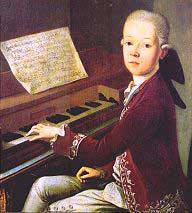
Mozartiana

“In my dreams of Heaven, I always see the great Masters gathered in a huge hall in which they all reside. Only Mozart has his own suite.”

Quote by Victor Borge


For further information E-mail us at: sms@herzerltours.com
or call us at 800-684-8488 or 914-771-8558

HERZERL TOURS, Special Interest Tours to Europe home page